all-news
month
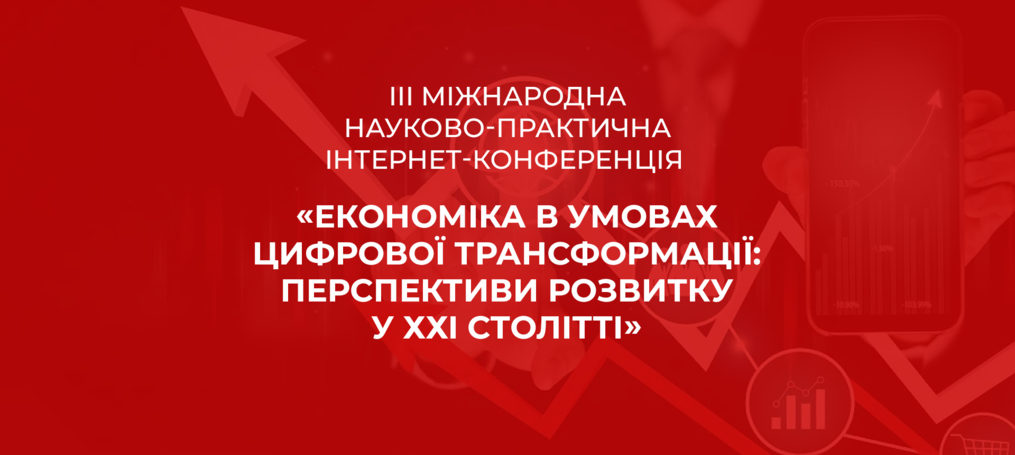
III International Scientific and Practical Online Conference “The Economy in the Context of Digital Transformation: Prospects for Development in the 21st Century”
On October 28, 2026, the State University of Trade and Economics hosted the Third International Scientific and Practical Online Conference, “Economics in the Context of Digital Transformation: Prospects for Development in the 21st Century”.
Anzhelika Gerasymenko, Dr. Ес. Sc. and Professor, Vice Rector for Scientific and Pedagogical Work and International Relations at the State University of Trade and Economics, delivered a welcoming address to the participants, noting the relevance of comprehensive research into the processes of digital transformation of the economy and their impact on the formation of a competitive environment. Professor Gerasymenko emphasized that, despite the extremely challenging conditions of martial law, the university continues to carry out educational and scientific activities and train specialists, and that digitalization opens up new opportunities for ensuring the continuity of the educational process, advancing scientific research, and expanding academic cooperation. The conference was moderated by Yurii Umantsiv, Dr. Ес. Sc. and Professor, Head of the Department of Economics and Competition Policy, who emphasized the relevance of scholarly analysis of the digital transformation of the economy – a process that is changing business models and management approaches, as well as significantly influencing the competitive environment.
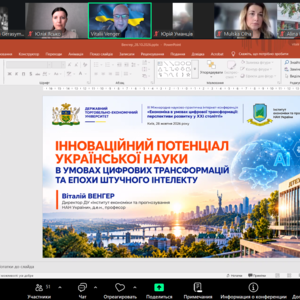
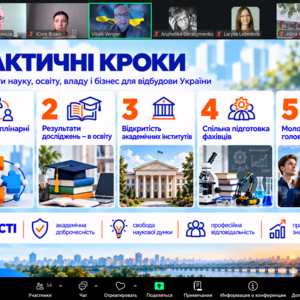
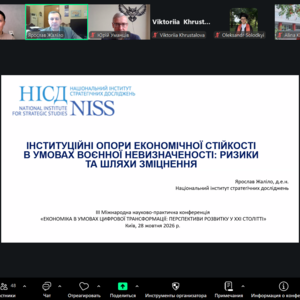
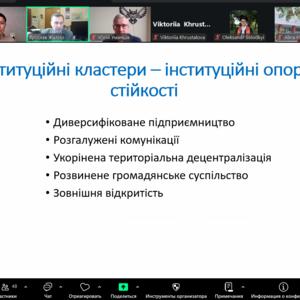
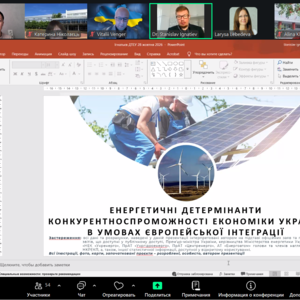
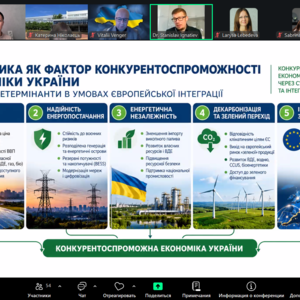
At the plenary session, presentations by conference participants were delivered and discussed. In his speech, Vitaliy Venger, Dr. Ес. Sc., Professor, and Director of the State Institution “Institute of Economics and Forecasting of the National Academy of Sciences of Ukraine,” highlighted current challenges in realizing the innovative potential of Ukrainian science in the context of digital transformation, emphasizing the importance of attracting investment in scientific and innovative activities. Stanislav Ignatyev, Dr. Tec. Sc., Professor, Chair of the Board of the Ukrainian Renewable Energy Association, focused on the pressing challenges of ensuring the competitiveness of Ukraine’s economy amid the war, analyzing the current state of the energy sector, the scale of losses in the power grid, and aspects of generating capacity utilization. Yaroslav Zhalilo, Dr. Ес. Sc., Deputy Director of the National Institute for Strategic Studies, focused on the challenges of ensuring Ukraine’s economic resilience amid digitalization and systemic uncertainty, emphasizing the importance of strengthening the institutional foundations of economic development and the need for balanced development of the “hard” and “soft” components of resilience.
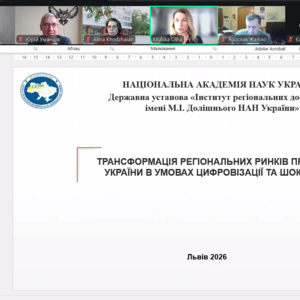
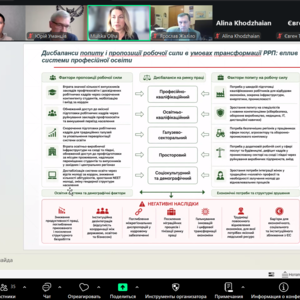
She emphasized the fundamental role of economic education in shaping the intellectual potential of society and the national elite, and analyzed the threats of the de-fundamentalization of economic education in the context of digitalization and the weakening of the theoretical and methodological component of training for candidates for the degree of Dr. Ес. Sc., Alina Khodzhyan, Professor and Chair of the Department of Economic Theory, Macro- and Microeconomics at Taras Shevchenko National University of Kyiv. Olga Mulska, Dr. Ес. Sc., Head of the Department of Regional Social and Humanitarian Development at the M. I. Dolishniy Institute of Regional Studies of the National Academy of Sciences of Ukraine, presented conceptual approaches to the transformation of Ukraine’s labor market in the context of digitalization and socioeconomic shocks, using the Carpathian region as an example, highlighting the most important prerequisites for the transition to innovative and productive employment, the formation of an effective system for replenishing the workforce, the alignment of vocational education with employers’ needs, and the development of human capital and labor mobility.
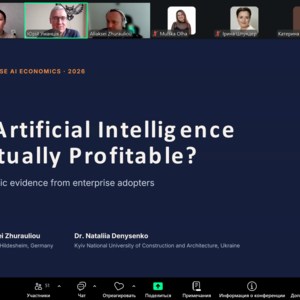
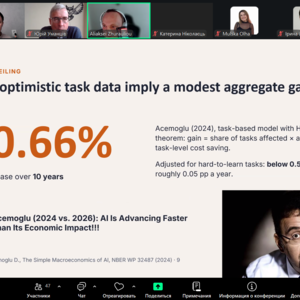
Dr. Ес. Sc., Hildesheim University (Germany) Aliaksei Zhurauvliou presented the results of a study on the economic efficiency of implementing artificial intelligence technologies in business operations amid the digital transformation of the economy, noting that the economic impact of using artificial intelligence depends significantly on the scale of its implementation, the organizational adaptation of enterprises, and the ability to integrate digital technologies into business processes.
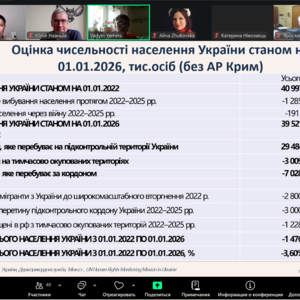
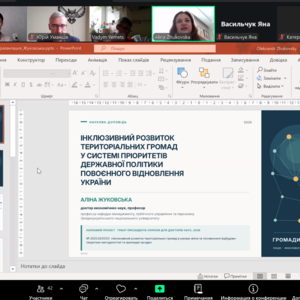
She highlighted current challenges in ensuring the inclusive development of local communities in the context of Ukraine’s post-war recovery, with particular attention paid to the need to create an inclusive environment, restore social infrastructure, and ensure equal access for the population to educational, medical, and cultural services – Dr. Alina Zhukovska, Dr. Ес. Sc., Professor in the Department of Management, Public Administration, and Human Resources at the Western Ukrainian National University. Vadym YEMETS, Dr. Ес. Sc. and Associate Professor in the Department of Economics and Competition Policy at the State University of Trade and Economics, presented the results of a study on the challenges of rebuilding Ukraine’s human capital amid a full-scale war and the prospects for post-war economic recovery, analyzing demographic losses, changes in population size and structure resulting from forced migration, temporary occupation of territories, and natural population decline.
He highlighted the challenges of formulating and implementing competition policy in the financial services market amid the digital transformation of the economy, analyzing the specific features of the development of competitive relations in the banking and insurance sectors, the need to ensure a level playing field for market participants, prevent the abuse of market power, and increase the transparency of pricing for financial services. He also examined the impact of digitalization, technological advancements, and digital platforms on the transformation of the competitive environment – Yuriі Umantsiv.
The conference featured a discussion of current theoretical, methodological, and practical issues in economic development in the context of digital transformation, namely, the uneven access to modern technologies for processing, storing, and transmitting information; the use by businesses and institutions of outdated systems that are difficult or impossible to integrate with new digital platforms; and the need for significant investments in software, hardware, and cloud services, which are often inaccessible to small and medium-sized enterprises. The discussion also focused on the challenges of transforming competitive relationships in the context of the economy’s digitalization, particularly those related to the specific use of artificial intelligence and the determination of access to cutting-edge services that confer certain competitive advantages and enable the implementation of innovations. This issue was particularly relevant in the context of discussing challenges related to the prospects for the development of manufacturing, logistics, and consumption following the end of martial law.
The participants in the discussion highlighted the special role of the digitalization of the economy and digital transformation as drivers of structural change in the national economy, enabling the modernization of economic relations and mechanisms of government regulation – with an increased emphasis on strategic planning – as well as improving the efficiency of market operations. Attention was also drawn to the fact that, under current conditions, military and specialized technologies – whose development has accelerated significantly – serve as a powerful driver of the economy’s digital transformation.
The results of the scientific research presented at the conference can be integrated into the educational process when teaching a wide range of academic disciplines. The practical application of the conference’s findings will help foster digital competencies among higher education students, develop critical and analytical thinking, and deepen their understanding of contemporary socioeconomic processes. A collection of papers has been compiled based on the results of the Third International Scientific and Practical Online Conference “Economics in the Context of Digital Transformation: Prospects for Development in the 21st Century”.
Yurii Umantsiv,
Head of the Department of Economics and Competition Policy at SUTE,
Katerina Nikolaiets,
Professor of the Department of Economics and Competition Policy at SUTE


Фотогалерея