

CERV «Участь громадян у розширенні ЄС»


Анонси
PARTICIPATORY EU ENLARGEMENT: INTERNATIONAL TRAINING EVENTS IN BELGRADE AND BUDAPES
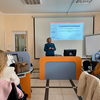
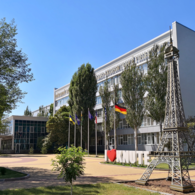
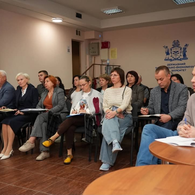
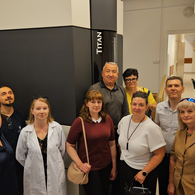
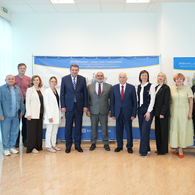
From November 14 to 21, 2026, the second educational module of the international project "Participatory Enlargement of the EU" (PEN), titled "Participatory Enlargement of the EU: Youth Policy Labs," took place at the State University of Trade and Economics. The event was the practical implementation of WP15 of the project and was organized under Grant Agreement No. 101252437-PEN, dated September 22, 2025, between the European Education and Culture Executive Agency (EACEA) and a consortium of partners from seven countries, with the support of the European Union's "Citizens, Equality, Rights and Values" (CERV) programme.
If the first module, held in April of this year, laid the theoretical groundwork, giving participants a systematic understanding of the history, institutions, and mechanisms of EU enlargement, the second module translated that knowledge into practice. The sessions took the form of interactive labs in which young participants themselves became the authors of policy recommendations. Participants worked daily on specific topics, from the free movement of workers and access to the EU labor market to the transparency of public procurement, consumer rights protection, the customs union, and anti-corruption control of public funds.
As part of the module, Professor Taras Hurzhii addressed the role of youth in the participatory enlargement of the EU and the environmental priorities of European integration. Associate Professor Nataliia Bondarenko focused on competitiveness and the third negotiation cluster, Volodymyr Kravchenko on labor market access and the free movement of workers, and Hanna Shvedova on anti-corruption investigations under the "Follow the Money" theme. Yuliia Tyshchenko and Olena Shevchenko explored consumer rights and Ukraine's path to the European community, while Olena Sudarenko addressed financial control of public funds and Oksana Piankova covered prospects for the customs union.
For her part, Associate Professor Anna Hurzhii led a two-day series of sessions on intellectual property as a tool of EU foreign policy: she presented the European experience and the challenges facing Ukraine, concluding the block with the final session "From Cases to Solutions," in which participants turned theoretical material into concrete recommendations on EU and Ukrainian intellectual property policy.
The labs culminated in the formulation and systematization of youth recommendations addressed to policymakers and decision-makers on EU enlargement. These proposals spanned all the key themes of the event, from labor market access and the free movement of workers to public procurement transparency, consumer protection, the fight against corruption in public finance, prospects for the customs union, and intellectual property protection.
Фотогалерея




PARTICIPATORY EU ENLARGEMENT: INTERNATIONAL TRAINING EVENTS IN BELGRADE AND BUDAPES
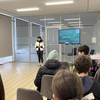
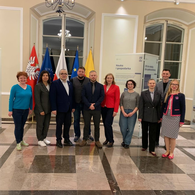
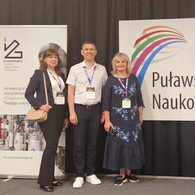
In September - October 2026, Belgrade (Serbia) and Budapest (Hungary) hosted events of the international technical assistance project CERV-PEN "Participatory EU Enlargement". At the Europe House in Belgrade, Docent Anna Hurzhii led a series of lectures and workshops for members of Serbian youth civil society organisations. The workshops modelled political decision-making on EU enlargement. Through interactive role-play simulations, participants explored the institutional and procedural aspects of enlargement and re-enacted realistic accession negotiation scenarios. They also presented their countries' positions and discussed the challenges that further enlargement of the Union may bring.
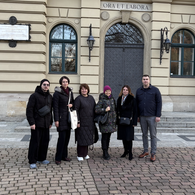
In Budapest, at the invitation of the Pillar Foundation, lecturers Anna Hurzhii and Taras Hurzhii ran a simulation of EU accession for Hungarian young people. Participants acted as EU institutions, Member States and candidate countries through every stage of the accession process. This ran from the membership application and the assessment of compliance with the Copenhagen criteria to cluster-based negotiations and the final political decision on admission. A separate discussion covered Ukraine's European integration amid armed aggression and the role of civil society in accession negotiations.
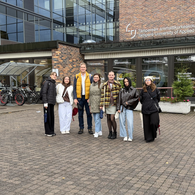
Ukrainian specialists also took part in a Training of Trainers programme. It brought together civic activists, youth leaders and educators from Ukraine, Germany, Hungary, Poland, Serbia, Albania and Montenegro. The programme covered how to prepare and moderate simulation games, including scenario design, role allocation, discussion facilitation and the assessment of learning outcomes. With the knowledge and skills they gained, participants will be able to run similar simulations on their own in educational institutions, civil society organisations and local communities. Proposals developed at the close of the training will be used in preparing the project's teaching and methodological materials.
Фотогалерея



UKRAINE'S PATH TO THE EU THROUGH THE EYES OF YOUTH
PROFESSOR T.O. HURZHII'S LECTURE FOR HUNGARIAN YOUTH LEADERS
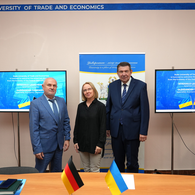
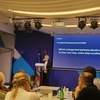
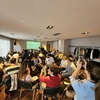
On June 26, 2026, Taras Hurzhii, Head of the Department of Administrative, Financial and Information Law at the State University of Trade and Economics, Doctor of Law, Professor, delivered a lecture to Hungarian youth as part of an interactive training organized under the international project "Participatory Enlargement of the EU" (PEN). The project is funded by the European Union's "Citizens, Equality, Rights and Values" (CERV) programme, and the event was hosted by the project's Hungarian partner — the Pillar Foundation.
In his presentation, Professor Hurzhii explored the Ukrainian dimension of EU enlargement: Ukraine today is one of the most illustrative examples of how this process unfolds in practice — not as an abstract legal procedure, but as a complex transformation of a candidate state, encompassing its policy, institutions, economy, security, and social life. The speaker offered a consistent account of the progress of Ukraine's accession negotiations, focusing on key areas: the rule of law, economic integration, the green transition, agriculture, and foreign policy alignment.
The lecturer presented a balanced picture of Ukraine's achievements and challenges, highlighting both progress toward EU standards and structural difficulties that remain unresolved. Public discussion of enlargement must be grounded in facts rather than stereotypes: informed citizens are better able to objectively assess the real balance of benefits and risks of accession — for both Ukraine and the European Union.
The lecture generated lively interest among participants and made a meaningful contribution to the project's broader goal — fostering informed public debate on EU enlargement across partner countries.
Фотогалерея


SUTE TEACHES PARTICIPATORY APPROACH AND ENGAGEMENTIN EU ENLARGEMENT PROCESSES
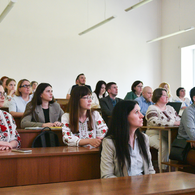
From April 20 to 24, 2026, the State University of Trade and Economics hosted a thematic module under Work Package 4 "Interactive Learning" of the international project "Participatory Enlargement of the EU" (PEN). The project is funded by the European Union's "Citizens, Equality, Rights and Values" (CERV) programme and brings together educational institutions and civil society organizations from seven European countries.
The thematic module "Participatory Enlargement of the EU: History, Present, and Prospects" launched the project's cycle of practical events and marked the first step in its implementation at SUTE. The event brought together faculty members and students to discuss pressing issues of European integration, the role of civil society in EU enlargement processes, and practical aspects of aligning Ukrainian legislation with European standards.
Over the course of five days, participants took part in a series of lectures and discussions delivered by faculty from the Department of Administrative, Financial and Information Law, the Department of Legal Support for Business Security, the Department of International, Civil and Commercial Law, and the Department of International Management at SUTE.
The module's agenda covered an exceptionally broad range of European integration issues: Guaranteeing Equal Access and Non-Discrimination in the Participatory Enlargement of the European Union (Assoc. Prof. A. Hurzhii), The institutional and political evolution and dynamics of EU enlargement (Assoc. Prof. N. Bondarenko), Personal data protection in the context of participatory democracy (Assoc. Prof. V. Kravchenko), Anti-corruption reform as a participatory obligation (Assoc. Prof. H. Shvedova), The role of conflict-of-laws regulation of private contractual and non-contractual relations in EU enlargement (Assoc. Prof. Y. Tyshchenko), The realities, challenges, and opportunities of participatory enlargement for Ukraine (Assoc. Prof. O. Piankova), as well as The role of civil society and mechanisms of communicative interaction between society and the state (Assoc. Prof. O. Shevchenko).
The module concluded with lectures by the Head of the Department of Administrative, Financial and Information Law, Doctor of Law, Professor Taras Hurzhii, titled "Participatory Enlargement of the EU: History and Present" and "Consultations with Civil Society as a Leading Instrument of EU Enlargement," which synthesized the key points raised by previous speakers and integrated them into a coherent vision of the participatory model of European integration.
As a result of the module, students gained a comprehensive understanding of the mechanisms of participatory EU enlargement, ranging from the historical logic of integration processes to concrete tools for engaging citizens in decision-making at both national and European levels. Participants mastered practical aspects of personal data protection, conflict-of-laws regulation of private legal relations, and the Council of Europe's anti-corruption standards, which are key components of aligning Ukrainian legislation with EU acquis requirements. A further outcome was the development of students' skills in analyzing the role of civil society and interterritorial cooperation as effective channels of communication between the state and society in the process of European integration.
The module's implementation marked an important step in fulfilling the university's obligations under the partnership agreement with the European Institute Foundation dated February 21, 2026, and reinforced SUTE's position as an active participant in international educational initiatives in the field of European integration.
Фотогалерея