

CERV «Участь громадян у розширенні ЄС»


Анонси
WP 4 DELIVERABLES |
MODULE 1 "PARTICIPATORY ENLARGEMENT OF THE EU: HISTORY, PRESENT, AND PROSPECTS"
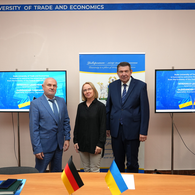
From April 20 to 24, 2026, the State University of Trade and Economics hosted a thematic module under Work Package 4 "Interactive Learning" of the international project "Participatory Enlargement of the EU" (PEN). The project is funded by the European Union's "Citizens, Equality, Rights and Values" (CERV) programme and brings together educational institutions and civil society organizations from seven European countries.
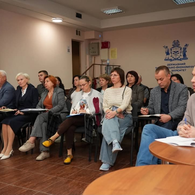
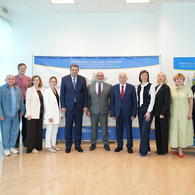
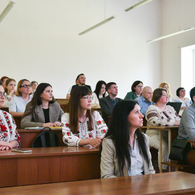
The thematic module "Participatory Enlargement of the EU: History, Present, and Prospects" launched the project's cycle of practical events and marked the first step in its implementation at SUTE. The event brought together faculty members and students to discuss pressing issues of European integration, the role of civil society in EU enlargement processes, and practical aspects of aligning Ukrainian legislation with European standards.
Over the course of five days, participants took part in a series of lectures and discussions delivered by faculty from the Department of Administrative, Financial and Information Law, the Department of Legal Support for Business Security, the Department of International, Civil and Commercial Law, and the Department of International Management at SUTE.
The module's agenda covered an exceptionally broad range of European integration issues: Guaranteeing Equal Access and Non-Discrimination in the Participatory Enlargement of the European Union (Assoc. Prof. A. Hurzhii), The institutional and political evolution and dynamics of EU enlargement (Assoc. Prof. N. Bondarenko), Personal data protection in the context of participatory democracy (Assoc. Prof. V. Kravchenko), Anti-corruption reform as a participatory obligation (Assoc. Prof. H. Shvedova), The role of conflict-of-laws regulation of private contractual and non-contractual relations in EU enlargement (Assoc. Prof. Y. Tyshchenko), The realities, challenges, and opportunities of participatory enlargement for Ukraine (Assoc. Prof. O. Piankova), as well as The role of civil society and mechanisms of communicative interaction between society and the state (Assoc. Prof. O. Shevchenko).
The module concluded with lectures by the Head of the Department of Administrative, Financial and Information Law, Doctor of Law, Professor Taras Hurzhii, titled "Participatory Enlargement of the EU: History and Present" and "Consultations with Civil Society as a Leading Instrument of EU Enlargement," which synthesized the key points raised by previous speakers and integrated them into a coherent vision of the participatory model of European integration.
As a result of the module, students gained a comprehensive understanding of the mechanisms of participatory EU enlargement, ranging from the historical logic of integration processes to concrete tools for engaging citizens in decision-making at both national and European levels. Participants mastered practical aspects of personal data protection, conflict-of-laws regulation of private legal relations, and the Council of Europe's anti-corruption standards, which are key components of aligning Ukrainian legislation with EU acquis requirements. A further outcome was the development of students' skills in analyzing the role of civil society and interterritorial cooperation as effective channels of communication between the state and society in the process of European integration.